Introduction
When colleagues start falling sick in the office, it is natural to worry that the same germs may be travelling home with you at the end of the workday. Even if you feel perfectly well, shared workspaces, lifts, meeting rooms, and public transport create countless opportunities for viruses to transfer quietly from surface to hand, and from hand to home.
Singapore’s dense work and living environments make this risk more pronounced. Open-plan offices, air-conditioned spaces, packed MRT trains, and compact homes mean that exposure does not stop once you leave the office. It often continues long after you return home, especially if cleaning habits stay unchanged during periods of widespread illness.
Once indoors, everyday routines can unintentionally turn work-related exposure into household spread. Touching light switches, placing bags on tables, or sitting on shared furniture allows germs to settle onto surfaces that family members touch repeatedly. This is where a thoughtful approach to disinfecting home environments becomes important.
Rather than resorting to exhausting or extreme measures, the goal is to focus on realistic, targeted cleaning that fits into busy working lives. Disinfecting home surfaces strategically, adjusting routines temporarily, and knowing when to seek help can significantly reduce risk without adding unnecessary stress.
Key Takeaways
- Germs picked up at work can easily follow you home through personal items and shared surfaces.
- Targeteddisinfecting homeroutines are more effective than excessive or unfocused cleaning.
- High-touch areas and poor airflow increase the risk of household transmission.
- Adjusting cleaning frequency during office outbreaks helps reduce exposure at home.
- Professional support can help busy Singaporeans maintain hygiene without burnout.
Understanding How Germs Travel From Office to Home
How Office Exposure Follows You Through the Day
Viruses that cause flu-like symptoms can remain viable on hard surfaces for up to 24 to 48 hours. Although fabrics tend to hold germs for shorter periods, Singapore’s warm and humid climate can allow moisture to prolong their survival slightly. This makes everyday items more effective carriers than many people realise.
In offices, shared equipment and communal areas become repeated contact points. Keyboards, mice, pantry counters, lift buttons, and door handles are touched by dozens of people daily. Once contaminated, these surfaces act as transfer hubs that pass germs onto hands, sleeves, bags, and personal devices.
From there, viruses hitch a ride on you through the rest of your day. They settle on your phone, your work bag, your clothes, and your hands. Without deliberate habits of disinfecting the home, these particles are easily introduced into domestic spaces.
Understanding this chain of contact highlights why disinfecting home routines should focus on transition points rather than a deep clean of everything indiscriminately.
High-Touch Areas That Carry Germs Home from the Workplace
Some items are especially effective at transporting germs from office to home:
- Personal work equipment such as keyboards, laptops, and mobile phones
- Travel essentials like EZ-Link cards, wallets, and reusable masks
- Entryway surfaces, including keys, shoe racks, and console tables
- Shared household controls such as remotes, light switches, and door handles
- Soft furnishings like sofas and cushions where droplets settle during talking or breathing
These areas experience repeated contact throughout the day. Without prompt attention, they become stable reservoirs for germs. Targeted practice of disinfecting the home should prioritise these zones. This is also why a professional cleaning company would typically focus on high-touch surfaces first.
How Airflow and Household Layout Affect Flu Transmission
Ventilation plays a major role in how long airborne droplets remain indoors. Many HDB flats and condominiums rely heavily on air-conditioning, with windows kept closed for long periods. While this is comfortable, it limits air exchange and allows viral particles to linger.
Poor airflow increases the chance that airborne droplets will settle onto surfaces, making disinfecting home environments more critical during office outbreaks.
Improve ventilation by opening windows for up to 15 minutes each day. This supports dilution of airborne germs and reduces the overall viral load in the home.
Simple airflow adjustments support surface cleaning. Together, both practices form a balanced approach to disinfecting home spaces during high-risk periods.
Cleaning Frequency During an Outbreak
When colleagues are frequently unwell, cleaning frequency at home should increase temporarily. This does not necessarily mean deep cleaning everything daily, but focusing on the right areas at the right intervals.
- Daily attention should go to switches, handles, remotes, and personal devices
- Entryway surfaces and frequently used items benefit from cleaning every other day
- Shared living areas can be refreshed weekly
- Items exposed to public spaces should be disinfected as needed
This structured approach supports disinfecting home routines without creating fatigue or placing unrealistic expectations on yourself.
What Not to Do When Cleaning During an Outbreak
Well-intentioned cleaning can become counterproductive if done incorrectly, especially during periods when illness is circulating. One common mistake is over-sanitising. Repeatedly spraying the same surfaces multiple times a day does not meaningfully increase protection once a surface has already been disinfected. Instead, it can degrade finishes on tables, countertops, and electronics, and may irritate skin or airways over time. A more effective approach is to disinfect high-touch areas once or twice daily using the correct product and allowing it to sit for the recommended contact time before wiping.
Another frequent misconception is relying on natural cleaners such as vinegar or lemon to kill viruses. While these substances are useful for removing grease or odours, they do not reliably neutralise flu-causing viruses. Using them as a substitute for proper disinfectants can create a false sense of security. Instead, reserve natural cleaners for general tidying and follow up with an approved disinfectant when sanitising areas that are touched frequently.
Spraying fabrics without proper drying is another issue, particularly in Singapore’s humid climate. Lightly misting sofas, curtains, or cushions may leave moisture trapped in fibres, leading to musty smells within hours. Over time, this can also encourage bacterial growth. A better option is to vacuum fabrics regularly, use steam cleaning where appropriate, and ensure windows are opened to promote airflow so surfaces dry fully.
Finally, mixing cleaning chemicals poses serious health risks. Combining products such as bleach with ammonia or acidic cleaners can release toxic fumes, even in small amounts. This often happens unintentionally when multiple products are used in quick succession. To stay safe, use one cleaning product at a time, rinse surfaces with water before switching products, and follow label instructions carefully. Safe cleaning is not about using more products, but about using the right one correctly.
Effective disinfecting home routines rely on the use of appropriate products, correct contact time, and moderation.
Practical Guide to Disinfecting Your Home After Exposure at Work
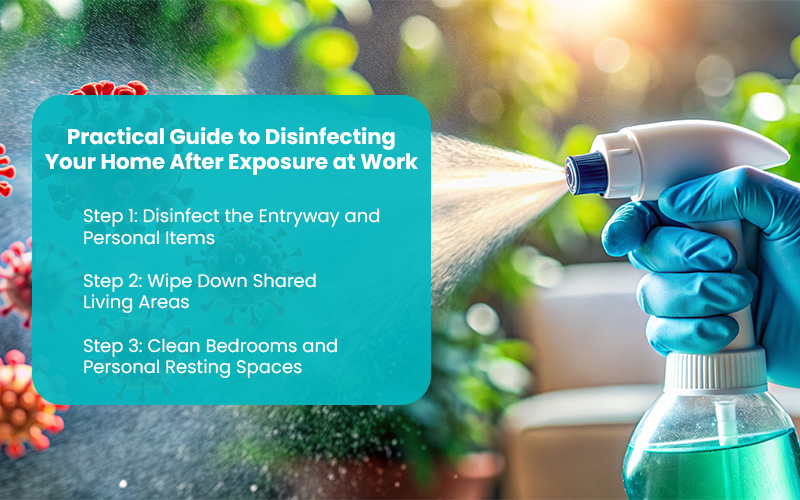
Step 1: Disinfect the Entryway and Personal Items
The entryway acts as the first line of defence. Designating a drop-off area for work-related items prevents germs from travelling deeper into the home.
Bags, keys, access cards, and phones should be wiped down upon arrival. Reusable masks should be removed and washed immediately. Shoe racks and console tables benefit from wiping every one to two days during outbreaks.
This initial step sets the tone for consistent disinfecting home habits that stop transmission early.
Step 2: Wipe Down Shared Living Areas
Living rooms and dining areas quickly accumulate germs due to shared use. These spaces require thoughtful upkeep rather than constant cleaning.
Vacuuming upholstery helps remove settled droplets. Tables, remotes, and armrests should be wiped regularly. Opening windows for short periods supports airflow and reduces airborne concentration.
These practices form the backbone of practical disinfecting home routines that feel manageable even during busy weeks.
Step 3: Clean Bedrooms and Personal Resting Spaces
Bedrooms deserve attention because of prolonged occupancy. Pillowcases collect respiratory droplets and should be changed more frequently when colleagues are falling sick.
Bedside tables, switches, and headboards benefit from regular wiping. Curtains can be refreshed by shaking them near open windows or using steam cleaning occasionally.
Thoughtful disinfecting home care in sleeping areas supports rest and reduces overnight exposure.
Household Sanitising Methods That Work Without Overdoing It
When colleagues are falling sick, it is easy to slip into panic mode and feel that every surface in the home needs constant disinfecting. In reality, excessive cleaning often creates more stress than protection. Examples of overdoing it include spraying disinfectant on the same surfaces multiple times a day, wiping down entire rooms that are rarely touched, or using multiple cleaning products in quick succession in an attempt to “double up” on protection. These habits add workload, increase chemical exposure, and do little to reduce actual transmission risk.
Not every surface needs daily disinfection. Effective methods focus on points where germs are most likely to transfer, rather than spreading effort evenly across the entire home. For example, wiping door handles, light switches, remote controls, and mobile phone screens once a day during an office outbreak delivers far more protection than disinfecting low-contact areas such as walls or shelves.
Using the correct product concentration also matters when disinfecting your home. Diluting disinfectants beyond the recommended ratio reduces effectiveness, while using stronger-than-needed solutions can damage surfaces. Allowing the product to remain on the surface for the stated contact time, often 30 seconds to a few minutes, ensures viruses are properly neutralised before wiping. Cleaning visibly dirty surfaces with a general cleaner first prevents grime from blocking the disinfectant from working.
Another effective method is rotational cleaning, where high-touch zones are prioritised daily while lower-risk areas are addressed every few days. This keeps hygiene standards steady without increasing workload. Improving airflow during cleaning, such as opening windows while wiping surfaces, also supports faster drying and reduces lingering airborne particles.
For working households that struggle to maintain this consistency during busy weeks, an hourly cleaning service can provide targeted support.
Short, focused sessions allow trained cleaners to address high-touch areas efficiently without committing to full-day cleaning, helping households maintain consistent disinfecting home practices without creating unnecessary workload.
Home Cleaning During Flu Season for Working Adults
During flu season, working adults often struggle to keep up with increased hygiene demands. Long hours and commuting leave little energy for extended cleaning sessions.
An effective home disinfection tip is to perform short, focused routines consistently. This ultimately is a stripped-down version of the earlier-mentioned household cleaning method.
A basic routine could be simplified to the following essential steps. Sanitising high-touch surfaces and ventilating the room for more than 15 minutes each day.
In this perspective, consistency in carrying out the essential small tasks is more important than attempting intensive, one-off cleaning efforts that are difficult to sustain over time.
This is where home cleaning during flu season becomes a matter of strategy rather than effort, especially when paired with the occasional professional support.
When Professional Support Makes Sense
There are times when personal routines are not enough. Busy schedules, family obligations, or extended outbreaks can make consistent disinfecting at home difficult to maintain. Engaging a trusted cleaning service in Singapore allows trained professionals to assist you in your efforts. These trained professionals focus on high-touch zones and enclosed spaces systematically. This ensures key areas receive proper attention even when time or energy is limited. This type of support helps households maintain hygiene standards during demanding periods, particularly when illness is circulating and when protecting vulnerable family members becomes a priority.
Part 4: Frequently Asked Questions
1. Is it necessary to disinfect my home if I am not showing symptoms?
Yes. People can carry viruses without symptoms, especially in shared office environments. Disinfecting home surfaces during an outbreak helps protect other household members and reduces the chance of silent spread.
2. Can I rely on wet wipes alone?
Wet wipes are useful for quick touch-ups but may not provide adequate contact time or concentration for full disinfecting home routines. They work best as a supplement rather than a replacement.
3. Does an outbreak mean my office is unhygienic?
Not necessarily. Enclosed spaces, shared equipment, and airflow patterns allow viruses to spread even in well-maintained offices. Outbreaks often highlight the limits of routine cleaning rather than negligence. In these situations, a commercial office cleaning service becomes part of the solution by increasing focus on high-touch zones, adjusting cleaning schedules during peak illness periods, and applying consistent disinfection protocols that reduce surface-level transmission throughout the workday.
4. What are some daily habits that reduce the risk of cross-contamination?
Wiping work equipment, sanitising hands before touching personal devices, and maintaining consistent disinfecting home routines together form a stronger defence than any single measure.
5. Should I disinfect my clothes after returning from work?
In most cases, regular laundry routines are sufficient. Work clothes do not need special treatment unless they have been in close contact with someone who is visibly unwell. Washing clothes as usual with detergent and allowing them to dry fully is effective. Avoid spraying disinfectants directly onto fabrics, as this can damage fibres and create odour issues in humid conditions.
6. How long should I continue extra cleaning if colleagues are recovering from falling sick?
Extra cleaning measures should continue as long as illness is still circulating in your immediate work environment. Once cases decrease and fewer colleagues are unwell, households can gradually return to normal routines. The goal is not permanent heightened cleaning, but short-term adjustments that reduce risk during peak exposure periods.
Conclusion
When colleagues are falling sick, the risk of bringing viruses home becomes a real concern for many Singaporeans. Shared offices, public transport, and compact homes make exposure difficult to avoid, especially during busy work periods.
A structured approach to disinfecting home environments helps break the chain of transmission, but it also demands consistency and time. For working adults balancing long hours and family responsibilities, maintaining this balance can be challenging.
This is where G Journey provides practical support, offering flexible, targeted cleaning sessions that focus on high-touch areas and real household needs. With options designed around busy schedules, we help working households maintain hygiene standards without adding strain to already full days.
Contact us to enquire about our cleaning services and get practical support in managing your home during an office outbreak, without disrupting your routine or adding unnecessary stress.