Introduction
Why Singapore Homes Have Unique Cleaning Needs
In Singapore, cleaning needs are shaped by a mix of climate, housing types, and daily routines. The year-round humidity accelerates dust adhesion, mould growth, and odour buildup, especially in enclosed spaces with limited ventilation. Even with regular upkeep, surfaces can feel sticky or damp more quickly.
Housing layouts also play a role. HDB flats, condominiums, and landed homes each have different spatial constraints and airflow patterns. Lifestyle patterns further influence cleaning demands, especially for dual-income households or hybrid work arrangements.
Understanding these local factors is essential when learning how to find a cleaner, as it ensures the service fits your daily reality.
Finding a cleaner is not simply about hiring extra help. It is about finding support that fits how your household functions. A cleaning arrangement that works well for one home may not work for another. This is why understanding how to find a cleaner begins with your household structure and cleaning frequency by household type.
This guide explores how different lifestyles affect cleaning needs, and how choosing the right service helps maintain hygiene and comfort. If you are trying to understand how to find a cleaner, this is where clarity begins.
Understanding Cleaning Services Available in Singapore
Once you understand how local conditions affect your home, the next step in learning how to find a cleaner is knowing what types of services are available. In Singapore, cleaning support typically ranges from flexible hourly sessions to recurring weekly arrangements, allowing households to choose based on lifestyle, space, and cleaning intensity.
Beyond basic cleaning, professional providers bring a level of structure and consistency that is difficult to replicate through DIY efforts. Trained cleaners follow systematic checklists, ensuring that high-use and often-overlooked areas are addressed each session. This includes not just visible surfaces, but also hidden moisture zones, corners, and ventilation areas where dust and buildup tend to accumulate.
Equipment and materials also make a difference. Professional services use purpose-specific tools such as high-suction vacuum systems, microfibre cleaning systems, and appropriate cleaning agents for different surfaces. This reduces the risk of damage while improving cleaning efficiency, especially in areas like kitchens, bathrooms, and flooring.
Experience plays an equally important role. Professional cleaners are trained to identify problem areas early, whether it is grease buildup, dampness, or recurring dust patterns. This allows them to prioritise effectively and maintain consistent hygiene standards over time, rather than reacting only when issues become visible.
Many providers also offer consultation or onboarding discussions, which are an important part of understanding how to find a cleaner that truly fits your household. These conversations help define scope, frequency, and priorities, ensuring expectations are aligned from the start.
For example, providers such as G Journey focus on aligning cleaning routines with household structure and daily schedules, offering flexible arrangements that adapt over time. This kind of tailored approach turns cleaning from a reactive task into a stable, predictable system that supports your home in the long run.
Key Takeaways
- Learning how to find a cleaner starts with understanding your household type, not just comparing prices or packages
- Cleaning frequency varies by household type, with families needing more regular upkeep than smaller or quieter homes
- Low-disruption cleaning schedules are essential for work-from-home and elderly households
- Child-safe cleaning practices and consistency matter more than perfection in family homes
- The right cleaning arrangement blends daily upkeep with professional support for long-term sustainability

How Household Make-Up Influences Cleaning Needs
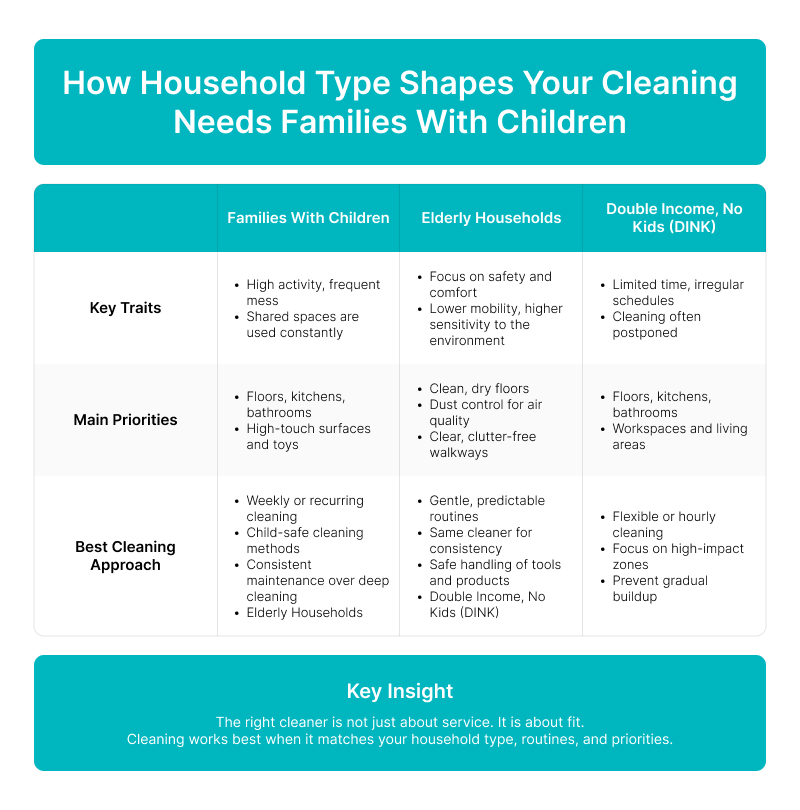
Families With Children
Homes with young children experience faster dust accumulation and frequent spills. Cleaning might not keep up with the constant movement between rooms and spaces. As a result, cleaning shifts focus towards maintaining a safe environment.
A “safe environment” in homes with children goes beyond looking clean. It refers to a space that actively reduces health risks, prevents accidents, and supports daily routines without hidden hazards.
In practical terms, it includes a few key elements:
1. Hygiene that limits germs and allergens
Surfaces that children frequently touch, such as floors, toys, tables, and switches, are kept clean to reduce exposure to bacteria, dust, and allergens. This is especially important as young children crawl, touch everything, and often put their hands in their mouths.
2. Low chemical exposure
Cleaning methods avoid leaving behind harsh residues or strong fumes. Products are used appropriately, and surfaces are properly wiped down, so children are not exposed to irritants through skin contact or inhalation.
3. Clutter control to prevent accidents
Walkways and play areas are kept clear to reduce trip hazards. Toys, cables, and loose items are managed so children can move around safely without obstruction.
4. Dry, slip-resistant surfaces
Floors are cleaned without being left wet or slippery, especially in high-traffic areas like living rooms and bathrooms, where children are more likely to run or play.
5. Attention to hidden problem areas
Less visible zones, such as under furniture, corners, or damp areas, are kept clean to prevent mould, pests, or buildup that could affect air quality and overall health.
In short, a safe environment is one where cleanliness supports both health and physical safety, not just appearance.
Understanding how to find a cleaner for family homes means prioritising consistency over one-off deep cleaning.
Common Cleaning Priorities in Family Homes With Children
Floors, kitchens, and bathrooms require regular attention. High-touch surfaces accumulate grime quickly, while toys and shared spaces need routine tidying.
Child-safe cleaning practices are essential, especially when selecting products and methods. When learning how to find a cleaner, families should ensure the cleaner is trained in safe handling practices.
Structured, Zone-Based Cleaning
Cleaning companies typically follow a structured workflow rather than moving randomly around the home. Areas are cleaned in zones, often starting from cleaner spaces and progressing to heavier-use areas. This reduces cross-contamination and ensures consistency across each session.
Prioritising High-Touch Surfaces
High-touch areas such as dining tables, switches, and door handles are addressed early in the cleaning process. This ensures that the surfaces children interact with most are cleaned thoroughly and consistently.
Use of Proper Tools and Materials
Professional cleaners use separate tools for different areas, such as kitchens and bathrooms, to prevent the transfer of bacteria. Microfibre cloths and purpose-specific equipment help capture dust and dirt effectively rather than spreading it around.
Safe and Controlled Product Use
Cleaning products are selected based on surface type and household needs. In homes with children, cleaners apply products carefully, use proper dilution, and wipe surfaces thoroughly to minimise residue and reduce exposure to strong chemicals.
Attention to Hidden Areas
Less visible spaces, such as corners, edges, and areas under furniture are cleaned systematically. These are common spots where dust, crumbs, and moisture accumulate, especially in active households.
Consistency Through Recurring Sessions
Over time, cleaners follow consistent checklists while adjusting based on the home’s usage patterns. This creates a stable maintenance routine instead of cycles of buildup and deep cleaning.
For this demographic, a cleaning service in Singapore with recurring schedules is ideal.
Alternatively, a weekly house cleaning service supports long-term upkeep and reduces stress.
Elderly Households
Elderly households prioritise safety and comfort. Dust, dampness, and clutter can affect mobility and well-being.
When considering how to find a cleaner, trust and familiarity become key factors in these homes.
Slip and Fall Prevention
Floors must be kept dry, clean, and free of debris. This includes careful mopping techniques that avoid leaving surfaces wet and ensuring walkways remain clear of obstacles such as loose items or cables.
Air Quality and Dust Control
Regular dusting of surfaces, fans, and ventilation areas helps reduce airborne particles that may affect breathing. Fine dust buildup is often overlooked but can have a greater impact in enclosed spaces.
Gentle Cleaning of Bathrooms and Kitchens
Bathrooms and kitchens require consistent cleaning to prevent dampness and odours, but methods should be gentle and controlled. Harsh scrubbing or strong chemicals can damage surfaces or create discomfort for seniors.
Clutter Management and Accessibility
Cleaning should support ease of movement within the home. Items should be returned to familiar positions, and surfaces should remain organised to avoid confusion or obstruction.
Respect for Routine and Familiarity
Consistency in how cleaning is carried out is important. Seniors often rely on familiar layouts and routines, so cleaners should avoid unnecessary rearrangement and maintain predictable workflows.
Safe Handling of Cleaning Tools and Products
Cleaning tools and products should be handled carefully and stored appropriately after use. This prevents accidental misuse and ensures the home remains safe after the cleaning session.
Cleaning Needs That Support Safety and Daily Comfort for Seniors
Regular Sweeping and Debris Removal
Frequent sweeping helps remove dust, fine debris, and small particles that can accumulate on floors. Keeping surfaces clear reduces the risk of slips and ensures walkways remain safe for daily use.
Gentle Mopping Techniques
Mopping should be done carefully to avoid leaving floors wet or slippery. Using well-wrung mops and controlled cleaning methods helps maintain cleanliness while ensuring surfaces dry quickly and remain safe.
Consistent Dusting for Air Quality
Dusting of shelves, furniture, fans, and ventilation areas is important for maintaining indoor air quality. Reducing dust buildup helps minimise respiratory discomfort, especially in enclosed living spaces.
Careful Bathroom Cleaning
Bathrooms require regular cleaning to prevent dampness, odours, and residue buildup. This includes maintaining toilet bowls, sinks, and shower areas, and ensuring floors are dry and non-slip after cleaning.
Gentle Kitchen Cleaning Without Harsh Chemicals
Kitchen surfaces such as countertops, sinks, and stovetops should be cleaned regularly using appropriate methods. Avoiding strong chemicals and ensuring proper wiping helps maintain hygiene without causing irritation or leaving residues.
Choosing the right cleaning company is part of finding a cleaner who supports both hygiene and emotional comfort.
Double Income, No Kids (DINK) Households
Double-income, no-kids households are households with both adults working full-time jobs.
Time constraints shape cleaning habits in these homes. Due to busy schedules, cleaning is often postponed, leading to a gradual buildup.
Understanding how to find a cleaner here means choosing flexibility over rigid schedules.
Irregular Cleaning Patterns Due to Busy Schedules
With both individuals working, cleaning is often done reactively rather than on a fixed routine. Tasks are delayed until a visible buildup appears, which can make maintenance feel more time-consuming when it is finally addressed.
Gradual Dust and Surface Buildup
Even in relatively tidy homes, dust settles over time on floors, furniture, and workspaces. Without consistent upkeep, this buildup can affect overall comfort, especially in living areas and bedrooms.
Kitchen Upkeep from Daily Use
Kitchens see regular use but may not be cleaned thoroughly after each meal. Over time, grease, residue, and food particles can accumulate on countertops, sinks, and stovetops, requiring more focused cleaning.
Bathroom Maintenance on a Weekly Basis
Bathrooms typically require weekly or bi-weekly cleaning to manage moisture, soap residue, and general hygiene. Delays in cleaning can lead to visible buildup and odours.
Flexible Cleaning Frequency That Fits Lifestyle
Vacuuming, mopping, and general upkeep are usually done weekly or bi-weekly, depending on availability. For this household type, flexible scheduling works better than fixed routines, allowing cleaning to fit around changing work commitments.
Understanding how to find a cleaner here means choosing flexibility over rigid schedules.
Vacuuming, mopping, and kitchen upkeep are typically done weekly or bi-weekly.
For this demographic, hourly cleaning services offer practical support. Learning how to find a cleaner that adapts to busy routines ensures consistency without disruption.
How Cleaners Support Double Income, No Kids (DINK) Households
For DINK households, the value of a cleaner lies in reducing decision fatigue and maintaining consistency despite unpredictable schedules. Instead of cleaning being postponed or done reactively, professional support ensures that key areas are maintained regularly without disrupting daily routines.
Flexible Scheduling That Adapts to Work Routines
Cleaners can be scheduled on a weekly, biweekly, or ad hoc basis, allowing households to adjust to their workload, travel, or social commitments. This flexibility ensures cleaning does not become another fixed obligation.
Focus on High-Impact Areas
Professional cleaners prioritise areas that most affect daily comfort, such as floors, kitchens, bathrooms, and workspaces. This targeted approach ensures noticeable results without needing full-home deep cleaning every session.
Consistent Maintenance Without Buildup
Regular cleaning sessions prevent the gradual accumulation of dust, grease, and residue. Instead of dealing with larger, time-consuming cleaning tasks, the home is maintained at a steady baseline of cleanliness.
Efficient Use of Time and Effort
Cleaners complete labour-intensive tasks such as vacuuming, mopping, and cleaning bathrooms more efficiently thanks to their experience and equipment. This allows working professionals to use their limited free time for rest or personal activities.
Structured and Systematic Cleaning Approach
Professional cleaners follow a clear workflow, ensuring that tasks are completed thoroughly and consistently. This reduces the variability often associated with DIY cleaning and ensures that no key areas are overlooked.
Before hiring, clarify scope, frequency, and expectations. Misalignment often leads to dissatisfaction.
A key part of finding a cleaner is setting clear boundaries from the start.
Scope of Work and Task Coverage
Clearly define what is included in each cleaning session. This may cover floors, bathrooms, kitchens, and general dusting, but may exclude tasks such as deep cleaning, appliance interiors, or specialised treatments. Aligning on scope prevents assumptions and ensures consistent expectations.
Cleaning Frequency and Scheduling Flexibility
Discuss how often cleaning will occur and whether the schedule can be adjusted as needed. Some households require fixed weekly sessions, while others benefit from more flexible arrangements that adapt to changing routines.
Cleaner Consistency and Assignment
Clarify whether the same cleaner will be assigned for each visit. Consistency builds familiarity with the home’s layout, routines, and preferences, leading to more efficient and predictable results over time.
Communication and Feedback Channels
Establish how instructions, preferences, and feedback will be communicated. This could include messaging platforms, written notes, or direct conversations. Clear communication helps maintain standards and address issues early.
Access and Entry Arrangements
Agree on how cleaners will access the home. This may involve someone being present, providing keys, or sharing digital access details. Clear arrangements ensure smooth operations and reduce inconvenience on cleaning days.
Expectations on Cleaning Standards
Align on what “clean” means for your household. Some prioritise visible tidiness, while others focus on hygiene or detailed cleaning. Setting this expectation early helps avoid mismatched outcomes.
Flexibility for Changing Needs
Household needs may change over time due to work schedules, health considerations, or lifestyle shifts. Understanding how the service can adapt is an important part of finding a cleaner that remains suitable in the long term.
How Lifestyle Patterns Shape the Right Cleaning Service
Is a Clean Home a Dream in Singapore’s Busy Culture?
Not quite a dream. More like a moving target.
In Singapore’s fast-paced environment, maintaining a consistently clean home can feel challenging. Long working hours, commuting, and dual-income households often mean cleaning is pushed aside. On top of that, humidity accelerates dust buildup, stickiness, and mould growth, so even well-kept homes can feel like they require constant upkeep.
That said, a clean home is still very achievable. The difference lies in how it is approached.
For most households, the goal shifts from perfection to maintenance that fits daily routines. Simple habits like wiping surfaces and managing clutter help control day-to-day mess, while more intensive tasks such as floor care, bathroom cleaning, and kitchen degreasing are handled periodically.
This is why many households rely on structured support from cleaning services or flexible cleaning arrangements. These services follow systematic processes, using checklists and specialised tools to address areas that are often missed during routine cleaning, especially hidden moisture zones.
In practice, a clean home in Singapore is less about constant effort and more about having the right system in place. When cleaning aligns with your lifestyle instead of competing with it, it becomes sustainable rather than overwhelming.
Busy Working Professionals
Professionals often clean reactively due to time constraints. Dust and clutter build up over time.
Low-disruption cleaning schedules are critical here. Knowing how to find a cleaner that fits irregular routines helps maintain consistency.
What to Handle Yourself vs What to Outsource
Light tasks, such as wiping surfaces, can be managed independently. More intensive tasks, such as floor cleaning and bathroom scrubbing, are best outsourced.
Understanding how to find a cleaner allows professionals to focus on high-impact cleaning without sacrificing time. More importantly, it ensures that cleaning is done with the right level of expertise and efficiency.
Professional cleaners bring structured methods, proper equipment, and the experience to handle different surfaces and problem areas effectively. They know how to prioritise high-use zones, use suitable cleaning agents, and apply systematic approaches that achieve consistent results.
Work-From-Home Households
Work-from-home setups require careful planning. Noise and movement can disrupt productivity.
Cleaning for work-from-home households must align with working hours. This makes finding a cleaner especially important for minimising disruption.
Balancing Daily Upkeep and Professional Cleaning
Light cleaning can be done daily, while heavier tasks should be scheduled off-peak.
Recurring services work best here. When deciding how to find a cleaner, prioritise those who offer flexible timing and structured routines.
Full-Time Homemakers
Daily upkeep is usually manageable, but heavier tasks can be physically demanding.
Understanding how to find a cleaner in this context means identifying where support is needed most.
Structuring DIY Cleaning and Professional Support
Routine tasks can be handled daily, while deep cleaning should be outsourced periodically.
A balanced approach is key. Learning how to find a cleaner helps maintain standards without increasing fatigue.
How a Balanced Cleaning Schedule Typically Works
Daily upkeep is combined with weekly or bi-weekly professional sessions.
This layered approach reflects a practical understanding of how to find a cleaner that complements existing routines.
Frequently Asked Questions
How often should I hire a cleaner for my household type?
It depends on activity levels and household size. Understanding how to find a cleaner includes choosing the right frequency for your lifestyle.
Is it better to hire the same cleaner regularly?
Yes, consistency improves efficiency. It is an important factor when deciding how to find a cleaner for long-term arrangements.
What if my household needs change over time?
Flexible services allow adjustments. This is why finding a cleaner should include scalability.
What is the difference between hiring a cleaning service and a live-in maid?
Cleaning services offer scheduled support, while live-in maids provide full-time assistance. Knowing how to find a cleaner helps determine which option suits your needs.
Conclusion
Finding the right cleaner starts with understanding your household, not by comparing packages. Family dynamics and lifestyle patterns shape how cleaning should be approached.
When you understand how to find a cleaner, cleaning becomes a seamless part of daily life rather than a disruption.
G Journey offers flexible solutions tailored to different household types, from families to working professionals. With adaptable scheduling and clearly defined scopes, each service evolves alongside your needs.
Contact us today if you are looking for help finding a cleaner who truly fits your lifestyle. We can help you build a cleaning arrangement that supports your routine, your space, and your peace of mind.