Key Takeaways:
- Leather upholstery maintenance becomes easier when broken into simple daily, weekly, and monthly routines.
- Singapore’s humid climate can accelerate oil buildup, moisture imbalance, and surface wear on leather furniture.
- Gentle cleaning habits help prevent common issues such as dryness, fading, and sticky residue.
- Daily dust removal, weekly light cleaning, and monthly conditioning work together to preserve leather’s texture and durability.
- When deeper buildup develops, professional support such as sofa deep cleaning in Singapore may help restore balance safely.
Why Leather Upholstery Needs Consistent Care in Singapore Homes
Leather upholstery adds comfort and visual warmth to a home, but it also reacts quickly to neglect, humidity, and incorrect cleaning habits. Many homeowners assume leather is low maintenance until issues such as surface cracking, colour fading, sticky residue, or dryness begin to appear.
In Singapore homes, where humidity and daily use are constant factors, a structured leather upholstery maintenance routine can make a significant difference. This guide breaks leather care into daily, weekly, and monthly habits so the process feels manageable rather than overwhelming. Each section focuses on what actually makes a difference, how often it should be done, and what mistakes homeowners should avoid.
Common Leather Upholstery Pain Points at Home
Leather issues often develop gradually and are easy to miss until they become difficult to reverse. Daily contact with skin oils, dust, and sweat causes slow surface buildup, while Singapore’s humidity accelerates moisture imbalance within the leather.
Over-cleaning with wet cloths, alcohol wipes, or household detergents strips protective finishes. At the same time, under-cleaning allows grit to accumulate and behave like sandpaper against the leather surface. Many homeowners also struggle with uncertainty around frequency. Some wipe the sofa repeatedly with water, while others avoid cleaning entirely for fear of causing damage.
Understanding leather upholstery care at home requires balancing both approaches. Leather benefits from gentle, consistent routines rather than occasional heavy cleaning sessions.
Common Leather Upholstery Damage Caused by Improper Cleaning
Improper cleaning can cause damage to leather to build up slowly, sometimes resulting in permanent changes to its appearance.
Surface Drying and Cracking
One of the most common problems occurs when leather is wiped frequently with water, alcohol-based wipes, or multipurpose household cleaners. These products remove protective coatings and natural oils, leaving the leather stiff and vulnerable to cracking over time.
Uneven Colour and Fading
Pigmented leather may lose its topcoat when exposed to harsh chemicals or abrasive cloths. Lighter-coloured sofas may develop uneven patches as moisture and oils penetrate the surface inconsistently.
Moisture Retention and Odours
Over-wetting is another frequent issue. Excess water can seep into seams and cushioning beneath the upholstery, creating conditions for odour retention or mould growth in humid environments.
Surface Abrasion From Scrubbing
Aggressive scrubbing to remove stains may cause micro-abrasions that dull the leather’s natural sheen. Once the protective finish becomes damaged, dirt can accumulate faster in those areas.
Understanding how to clean leather furniture safely is therefore less about strong cleaning agents and more about controlled frequency and gentle techniques.
Daily Leather Upholstery Care That Prevents Long-Term Damage
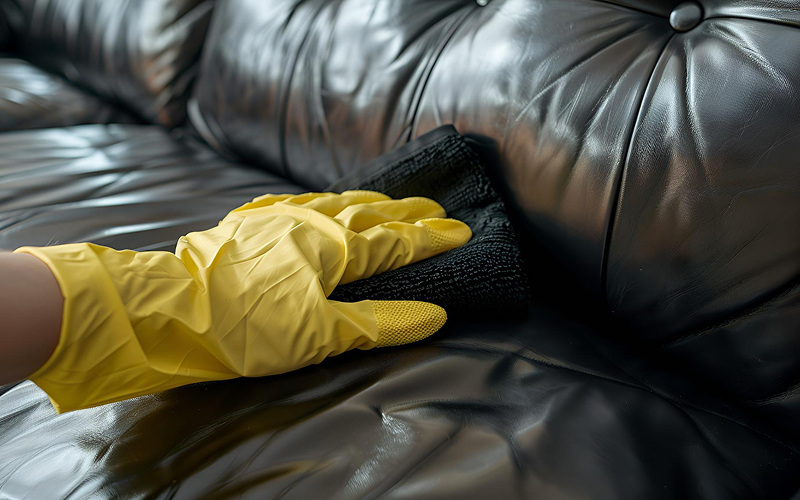
Daily care is about small steps done consistently as a method of prevention. A quick dry wipe using a soft microfibre cloth removes surface dust and loose particles that could otherwise scratch the leather over time.
High-contact areas such as armrests, headrests, and seat edges benefit the most from this habit. Over weeks of use, these areas collect the highest concentration of skin oils and sweat.
A simple daily leather sofa care routine may include:
- Wiping armrests and seating areas with a dry microfibre cloth
- Removing crumbs or dust particles from creases
- Avoiding wet tissues, disinfectant sprays, or alcohol wipes
- Keeping leather furniture away from direct sunlight or strong heat sources
These small daily actions reduce friction and help maintain the leather’s natural surface finish.
Weekly Cleaning to Control Oils, Dirt, and Texture Changes
Weekly cleaning focuses on removing accumulated oils and dirt without saturating the leather.
A slightly damp cloth or a pH-balanced leather cleaner can be used to gently wipe the surface. The cloth should be wrung until almost dry before touching the leather. Cleaning should follow light circular motions without scrubbing.
Areas where skin frequently contacts the sofa deserve particular attention, including:
- Seat cushions
- Armrests
- Headrest areas
This level of cleaning supports consistent leather upholstery maintenance by preventing oil buildup that may cause discolouration or sticky surfaces over time.
For households where the sofa receives heavy daily use, such as homes with pets, children, or frequent guests, occasional leather sofa cleaning in Singapore may also help remove deeper residue safely.
Monthly Conditioning and Deep Care for Longevity
Monthly maintenance focuses on restoring moisture balance within the leather.
Leather naturally loses oils over time through daily contact and environmental exposure. Conditioning products help replenish this loss, improving flexibility and reducing the likelihood of surface cracking.
A monthly care routine typically includes:
- Inspecting the sofa for dryness, colour transfer, or surface wear
- Applying a thin layer of leather conditioner with a soft cloth
- Allowing the product to absorb into the leather
- Buffing gently to remove any excess residue
Spot testing is always recommended before conditioning the entire surface, particularly for lighter or more delicate leather types.
Consistent conditioning forms an important part of long-term leather upholstery maintenance, helping leather remain supple even in air-conditioned environments.
When Professional Support Makes a Practical Difference
Even with careful home routines, some forms of dirt become embedded within the leather grain or trapped in seams and cushioning.
Professional cleaning can help remove these deeper residues without damaging the material. Specialised equipment and controlled cleaning solutions allow technicians to rebalance moisture levels and lift stubborn oils safely.
This becomes especially relevant for:
- Older leather sofas
- Furniture exposed to frequent spills
- Homes with pets or young children
- Sofas that already show signs of stiffness or uneven colouring
In these situations, engaging a sofa cleaning service, like G Journey, can complement regular home routines.
Maintain Your Leather Sofa With Help From G Journey
Leather sofas can remain comfortable and visually appealing for many years when care routines are consistent and gentle. Breaking leather upholstery maintenance into manageable daily, weekly, and monthly habits allows homeowners to protect their furniture without turning cleaning into a complicated task.
For homeowners who want a safer and more thorough approach, G Journey provides specialised upholstery care designed for delicate materials such as leather. Their professional cleaning methods help remove embedded dirt while protecting the leather’s natural texture and finish.
If your sofa requires deeper care beyond regular home routines, consider engaging a professional team. Contact us to learn more about their cleaning services and schedule a consultation to keep your leather furniture in excellent condition.