Key Takeaways:
- Kitchen cleanliness depends on what you clean immediately, not cleaning everything at once
- Oil splatters in the kitchen should be removed promptly to prevent grease build-up and stains
- Surfaces exposed to raw food and moisture require immediate attention to reduce contamination risks
- A structured kitchen cleaning frequency makes daily upkeep more manageable in Singapore homes
- Deeper cleaning support, such as engaging a cleaning service, helps address long-term grease accumulation
Kitchen Cleanliness Explained: What Really Needs Immediate Attention
Cooking inevitably creates a mess. Oil splatters, food residue, and moisture are part of daily kitchen use, but not every surface needs to be scrubbed the moment cooking ends. Understanding when to clean the kitchen after cooking helps homeowners maintain kitchen cleanliness without unnecessary effort.
Kitchen cleanliness is not only about keeping the space looking neat. It is directly linked to hygiene and food safety, as the kitchen is where ingredients are handled, prepared, and consumed. Residue left on surfaces can harbour bacteria, contaminate food during subsequent use, and contribute to odours or pest attraction over time. This makes cleaning practices an important part of maintaining a safe home environment, not just an aesthetic preference.
In Singapore homes, where enclosed kitchens and humid conditions can trap grease and odours, a balanced cleaning approach is especially important. Prioritising high-risk areas prevents bacteria build-up, reduces slip hazards, and keeps the kitchen comfortable for everyday use.
What Happens in the Kitchen During Cooking
During cooking, heat and movement cause particles to spread beyond the immediate cooking zone.
Oil splatters in the kitchen can land on:
- Stovetops and burner edges
- Backsplash tiles and grout lines
- Countertops and cabinet fronts
- Floors near the cooking area
At the same time, moisture and food residue accumulate around sinks and preparation zones. In Singapore’s humid climate, these residues do not dry out quickly. Instead, they combine with airborne dust and grease, forming a sticky layer that traps odours and bacteria.
Left unattended, this build-up hardens over time, making future cleaning more time-consuming and less effective.
What Should Be Cleaned Immediately After Cooking
Not all cleaning tasks are urgent, but certain areas directly impact hygiene and safety. Addressing these immediately supports consistent kitchen cleanliness.
Priority cleaning tasks include:
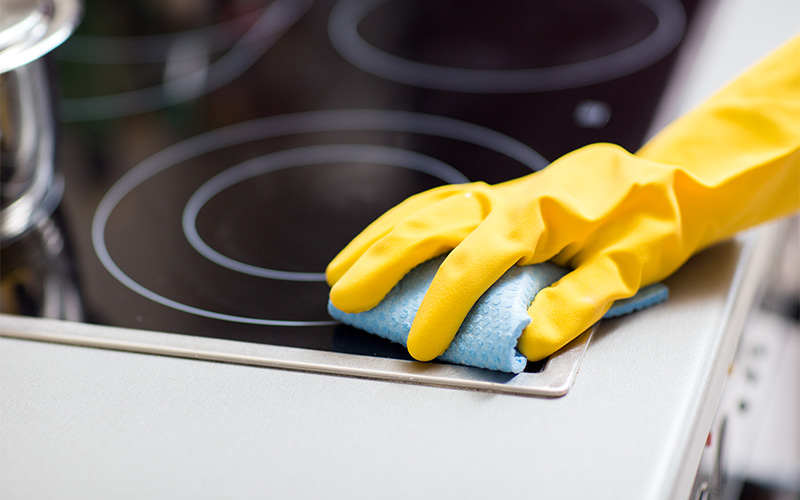
- Stovetops and surrounding surfaces
Wipe away oil splatters while surfaces are still warm (but safe to touch). This prevents grease from hardening into stubborn residue.
- Kitchen counters and prep areas
Clean immediately after handling raw ingredients to reduce cross-contamination risks.
- Oil spills on floors
Remove straight away to prevent slips, especially in compact HDB kitchens where movement space is limited.
- Used utensils and cutting boards
Rinse or wash promptly to prevent residue from drying and bacteria from multiplying.
A quick post-cooking wipe-down often takes only a few minutes, yet significantly reduces the effort required later.
What Can Wait Without Compromising Hygiene
Understanding when to clean the kitchen after cooking also means recognising what can be delayed safely.
Tasks that can wait include:
- Non-greasy cookware used for boiling or steaming
- Plates and cutlery without raw food contact
- Light splashes on cabinet exteriors or walls
These can typically be cleaned later within the same day without affecting overall hygiene.
The key distinction is simple:
- Clean immediately if oil, moisture, or raw food is involved
- Delay if the surface is low-risk and dry
This approach helps maintain efficiency without over-cleaning.
Kitchen Cleaning Frequency for Singapore Homes
Maintaining kitchen cleanliness is about consistent routines. A clear cleaning frequency helps prevent build-up, especially in households that cook daily.
A practical structure includes:
- After every cooking session
Wipe stovetops, nearby counters, and any visible oil splatters
- Daily
Clean sinks, taps, and frequently touched handles
Sweep or mop areas near the stove
- Weekly
Degrease backsplash tiles and cabinet fronts
Clean extractor hood surfaces
This is often covered under a weekly house cleaning service, which helps maintain consistency
- Monthly or as needed
Deep clean areas behind appliances and under heavy equipment
Remove accumulated grease in hard-to-reach corners
Avoid leaving grease overnight where possible, as it hardens and becomes more difficult to remove.
Common Situations Where Cleaning Is Delayed
In reality, immediate cleaning is not always practical. Many Singapore households face constraints such as:
- Late-night cooking after work
- Shared kitchens in multi-generational homes
- Limited time during weekday routines
- Frequent use of oil-heavy cooking methods
Over time, small delays can lead to visible grease build-up, especially around cabinet handles, backsplash areas, and ventilation zones.
This is where structured support, such as a professional cleaning service, can help restore and maintain hygiene standards without disrupting daily routines.
When Regular Cleaning Is Not Enough
Even with consistent habits, grease and residue can accumulate in areas that are not cleaned daily.
Common problem spots include:
- Cabinet tops and hidden ledges
- Extractor fans and filters
- Corners near the stove
- Behind and beneath kitchen appliances
In humid environments, these areas can develop sticky residue and lingering odours over time. A periodic deep clean, such as a spring cleaning service, helps remove built-up grime that routine wiping cannot fully address.
A Smarter Approach to Kitchen Cleanliness with G Journey
Maintaining kitchen cleanliness does not mean cleaning everything immediately after cooking. It is about prioritising the right tasks at the right time. Addressing grease, moisture, and raw food residue promptly while scheduling less urgent tasks later creates a practical and sustainable routine.
For households managing busy schedules or frequent cooking, additional support can make a noticeable difference.
At G Journey, our cleaning services are designed to help Singapore homes stay clean, hygienic, and manageable. From regular upkeep to deeper cleaning sessions, our team focuses on removing grease build-up, food residue, and hidden grime across kitchen spaces.
Contact us if your kitchen is becoming harder to maintain despite regular cleaning. Leave it to us to restore a cleaner and safer kitchen for you.