Key Takeaways:
- Understanding the type of stain is the first step in learning how to clean toilet stains effectively and safely.
- Light stains respond well to gentle cleaning, while mineral and rust stains require stronger, targeted methods.
- Consistent cleaning prevents buildup, reducing the need for aggressive scrubbing or harsh chemicals.
- Avoid mixing cleaning agents, as this can damage surfaces and release harmful fumes.
- When stains become persistent, structured support such as a cleaning service in Singapore can help maintain long-term hygiene.
How to Clean Toilet Stains: A Step-by-Step Guide for a Cleaner Bathroom
Toilet stains are a common household issue that can develop even with regular cleaning. Mineral deposits, organic waste, and prolonged moisture exposure can leave marks that are difficult to remove if not addressed correctly. Understanding how to clean toilet stains properly helps you choose the right method, avoid damaging the toilet bowl, and maintain a hygienic bathroom environment, especially in Singapore’s humid climate, where moisture accelerates buildup.
Understanding Common Toilet Stains and Why They Form
Toilet stains vary in colour and texture depending on their cause. The most common types include:
- Brown or reddish stains: Often linked to mineral-heavy water, leading to limescale toilet stains.
- Yellow stains: Typically caused by urine stains on the toilet bowl and residue buildup.
- Dark ring stains: Form at the waterline due to prolonged exposure to standing water and deposits.
- Orange or rust-coloured stains: Usually caused by iron content, resulting in rust stains in the toilet.
In Singapore, water quality is generally treated and safe, but mineral traces and daily usage still contribute to gradual staining. Over time, these stains harden as water evaporates, making them more resistant to standard cleaning methods.
What Happens If Toilet Stains Are Left Untreated
Ignoring toilet stains does more than affect appearance. Over time, untreated buildup can lead to deeper hygiene and maintenance issues that become harder to manage.
- Stains become harder to remove
Mineral deposits and residue continue to accumulate and harden, making simple cleaning methods less effective over time. - Bacteria and odour build-up
Stained areas can trap bacteria, contributing to unpleasant smells and reduced overall bathroom hygiene. - Surface damage to the toilet bowl
Prolonged exposure to limescale and rust can gradually wear down the porcelain surface, increasing the likelihood of permanent discolouration. - Increased cleaning effort and chemical use
Neglected stains often require stronger cleaning agents and more aggressive scrubbing, which can damage surfaces if not handled carefully. - Recurring staining cycle
Once buildup sets in, stains tend to return faster, creating a cycle that becomes progressively more difficult to control.
Addressing stains early helps maintain both hygiene and the condition of your toilet, reducing the need for intensive cleaning later on.
How to Clean Light Yellow or Fresh Toilet Stains
Light stains are easier to remove when treated early using gentle methods. This is often the first step in mastering how to clean toilet stains effectively.
Step-by-step method:
- Flush the toilet and allow the water level to settle
- Apply a mild toilet cleaner or diluted acidic solution around the bowl
- Let the solution sit for 10–15 minutes
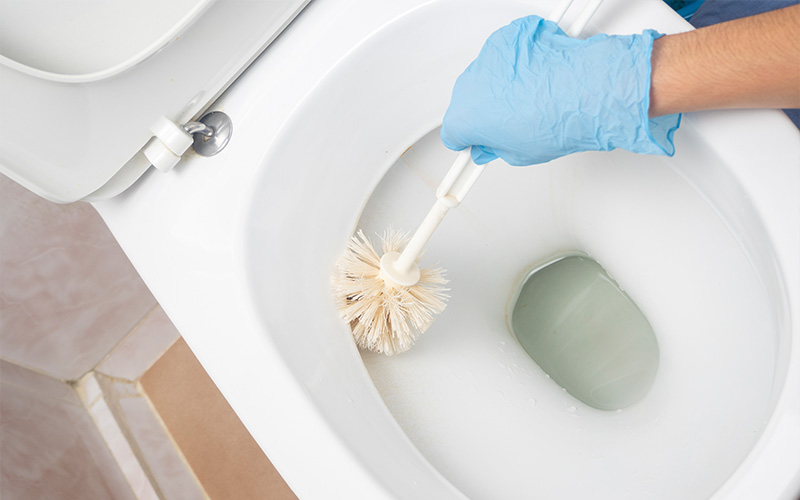
- Scrub gently with a toilet brush, focusing on stained areas
- Flush to rinse away loosened residue
What to avoid:
- Using abrasive pads or harsh brushes
- Scrubbing aggressively, which can scratch porcelain and trap future stains
For households with irregular upkeep, engaging a home cleaning service in Singapore can help maintain consistency and prevent stains from setting in.
How to Remove Brown, Hard Water, or Mineral Stains
Stubborn stains such as limescale require stronger cleaning agents and longer contact time.
Step-by-step method:
- Lower the water level by flushing and holding the lever briefly
- Apply an acidic-based cleaner directly onto stained areas
- Leave the solution for at least 30 minutes
- Scrub with firm but controlled pressure
- Flush thoroughly and repeat if necessary
Key considerations:
- Never mix cleaning products such as bleach and acid-based cleaners
- Ensure proper ventilation during cleaning
Mineral stains tend to recur in high-use bathrooms, making routine cleaning essential to avoid heavy buildup.
Tackling Rust Stains and Persistent Toilet Ring Build-Up
Rust stains on toilet surfaces and dark ring stains often indicate long-term buildup that requires a more targeted approach.
Step-by-step method:
- Apply a specialised cleaner designed for rust or ring stains
- Let it sit for at least 30 minutes or longer for severe buildup
- Scrub evenly around the affected area
- Flush and inspect
- Repeat weekly to prevent recurrence
Why this matters:
Persistent ring stains can harden over time, making them increasingly difficult to remove. In Singapore’s humid conditions, bacteria and residue can accumulate faster, contributing to odours and hygiene concerns.
For busy households, using hourly cleaning services in Singapore provides flexibility to maintain bathroom cleanliness without overcommitting time and effort.
Preventing Toilet Stains from Returning
Once you understand how to clean toilet stains, prevention becomes the next priority.
Practical maintenance tips:
- Clean the toilet bowl at least once a week
- Flush regularly to prevent residue buildup
- Use appropriate cleaners based on stain type
- Avoid letting cleaning products sit too long on surfaces
- Keep the bathroom dry and well-ventilated
Consistency is key. Preventive cleaning reduces the need for stronger chemicals and protects the toilet surface over time.
What a Clean Toilet Bowl Should Look Like: Baseline Visual Cues
Knowing how to clean toilet stains is only part of the process. It also helps to understand what a properly cleaned toilet bowl should look like, so you can maintain that standard consistently.
- Even and uniform colour across the bowl
The porcelain surface should appear consistently white (or its original colour) with no yellowing, brown patches, or dull areas - No visible waterline ring
The area where water meets the bowl should be clear, without dark or chalky rings forming around it - Smooth, glossy surface
A clean toilet bowl reflects light slightly and feels smooth to the eye. Any cloudy or matte patches may indicate residue buildup - No streaks or drip marks
There should be no vertical streaks running down the bowl, which often signal incomplete cleaning or leftover product - Clear, odour-free water after flushing
After a flush, the water should appear clean with no floating particles or lingering smell - Underside of the rim is clean
Check beneath the rim, where hidden buildup often forms. This area should be free from dark spots or residue
Using these visual cues helps you maintain a consistent standard of cleanliness, making it easier to spot early signs of staining before they become more difficult to remove.
Keeping Toilet Stains Under Control with Professional Help
Learning how to clean toilet stains is not just about removing visible marks. It is about understanding what causes them, applying the right method, and maintaining a consistent routine to prevent recurrence.
In many homes, especially those with high usage or limited time for upkeep, stains can return quickly despite best efforts. This is where structured, professional support can make a meaningful difference.
G Journey provides reliable, systematic cleaning solutions that help prevent buildup before it becomes a persistent issue.
Contact us if managing toilet stains has become time-consuming or frustrating. Let us help you keep your bathroom cleaner and fresher.