
Key Takeaways:
- Understanding how to clean stove burners helps maintain even flame distribution and safer cooking in Singapore homes
- Daily wiping prevents grease from hardening, especially in humid environments where residue builds up faster
- Weekly cleaning, including soaking stove burners, removes deeper grease and clears early blockages
- Avoid using metal tools when cleaning clogged burner holes, as this can damage flame performance
- Consistent care reduces the need for heavy stove burner degreasing and prolongs the lifespan of your appliance
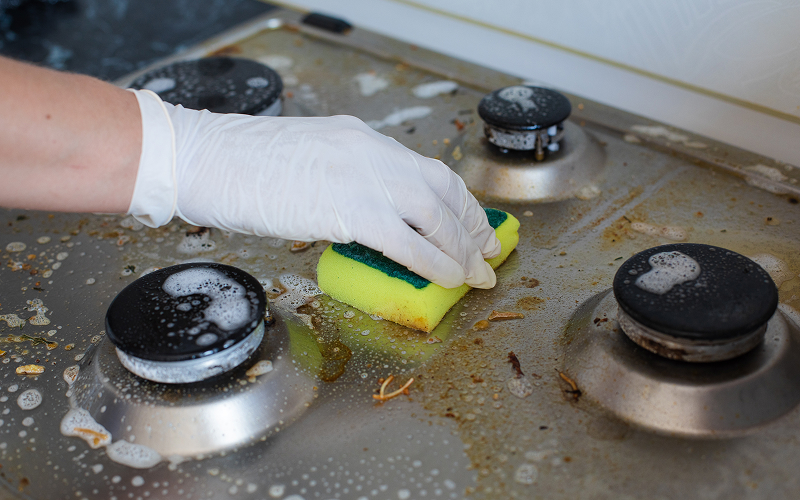
How to Clean Stove Burners Safely
Stove burners collect grease, food spills, and carbon residue every time you cook.
If left unattended, this build-up affects flame quality, causes uneven heating, and increases safety risks.
Knowing how to clean stove burners safely at home helps maintain cooking performance, prevent component damage, and reduce unnecessary exposure to harsh chemicals.
Maintaining a routine becomes essential to avoid stubborn residue, especially in Singapore kitchens, where frequent cooking and humidity accelerate grease buildup.
What You Need Before You Start Cleaning
Having the right tools ready helps you clean more efficiently while avoiding damage to burner components. Most items are simple and commonly found in Singapore households.
Essential cleaning tools
- Mild dishwashing liquid (avoid harsh or highly acidic cleaners)
- Soft sponge or non-abrasive scrub pad
- Microfibre cloth for wiping and drying
- Soft-bristled brush or old toothbrush for detailed cleaning
For deeper cleaning
- A bowl or basin for soaking stove burners
- Wooden toothpicks or skewers for cleaning clogged burner holes
- Baking soda (optional) for gentle stove burner degreasing
- Warm water for loosening grease and residue
What to avoid
- Metal brushes or steel wool, which can scratch surfaces
- Sharp objects that can widen burner holes and affect flame output
- Strong chemical cleaners that may leave harmful residue
Preparing these tools in advance ensures a smoother process and reduces the risk of damaging your stove during cleaning.
Safety Considerations Before You Start Cleaning
Before cleaning, preparation is essential for both safety and effectiveness.
Key considerations
- Ensure the stove is fully cool before handling any parts
- Turn off the gas supply or unplug the appliance
- Remove burner caps and grates gently to avoid chipping or bending
Risks if skipped
- Burns from residual heat
- Damage to ignition ports
- Gas flow issues if components are reassembled incorrectly
Time required: 5–10 minutes
This preparation step should be done every time, even for light cleaning.
Cleaning Timeline: What to Do and When
Understanding when to act is just as important as knowing how to clean stove burners. Grease and residue do not build up overnight, but once hardened, they become much harder to remove.
Within hours after cooking
Residue is still soft and easy to wipe away. A quick clean prevents long-term buildup.
After 2–3 days
Grease begins to settle and stick to surfaces, especially in enclosed HDB kitchens with limited ventilation.
After 1 week
You may notice visible grease, dull burner surfaces, or early signs of blocked ports.
After several weeks
Hardened carbon and grease deposits form, often requiring deeper cleaning and more time.
In reality, many households only notice the issue when performance drops, making cleaning more intensive.
Light Cleaning After Regular Cooking (Daily or Every 2–3 Days)
Light cleaning prevents grease from hardening and keeps burners functioning properly.
Actionable steps
- Wipe burner surfaces and surrounding areas with a damp cloth and mild dishwashing liquid
- Remove loose food debris with a soft brush or cloth
- Dry surfaces thoroughly before the next use
Common mistakes
- Leaving grease overnight, which causes it to harden
- Spraying cleaner directly onto hot burners, leading to residue and fumes
Time required: 10–15 minutes
Frequency: After heavy cooking or every few days for frequent users
Keeping up with this routine reduces the need for intensive removal of grease from stove burners later on.
For households with packed schedules, engaging hourly cleaning services can help maintain this baseline level of cleanliness consistently, ensuring that grease is managed before it builds up into a more time-consuming problem.
Medium Cleaning for Visible Grease and Blocked Ports (Weekly)
Weekly cleaning addresses grease that has started to settle and affect performance.
Actionable steps
- Remove burner caps and begin soaking stove burners in warm water with mild detergent for 15–20 minutes
- Use a soft brush or toothbrush to clean grease and food residue
- Clear burner holes gently using a wooden toothpick
- Rinse thoroughly and dry completely before reassembly
Common mistakes
- Using metal tools to clear holes, which enlarges ports and disrupts the flame pattern
- Reassembling parts while damp, leading to ignition problems
Time required: 30–40 minutes
Frequency: Once a week or more often for oil-heavy cooking
This step is especially important for cleaning clogged burner holes, which directly affects flame consistency.
Deep Cleaning for Heavy Build-Up (Monthly or As Needed)
Deep cleaning restores burners affected by prolonged neglect or heavy cooking.
Actionable steps
- Soak burner components for up to 30 minutes in warm soapy water for effective stove burner degreasing
- Gently scrub stubborn residue using non-abrasive tools
- Inspect ports and ignition areas carefully for blockages
- Allow all parts to air-dry fully before reinstalling
Risks of improper deep cleaning
- Abrasive pads scratching burner surfaces
- Excessive soaking affecting internal components
- Mixing cleaning products, which can release harmful fumes
Time required: 45–60 minutes
Frequency: Monthly or when burners show uneven flames or visible carbon build-up
For households that cook frequently, supplementing this routine with a home cleaning service can help manage grease buildup across the entire kitchen, not just the stove.
Common Signs Your Stove Burners Need Cleaning
Sometimes the need to clean is not obvious until performance drops. Look out for these signs:
- Uneven or yellow flames instead of steady blue flames
- Delayed ignition or clicking sounds
- Strong burnt smells during cooking
- Visible grease or carbon deposits on burner caps
If these signs persist despite regular cleaning, it may be time to consider more thorough upkeep, such as engaging professional cleaning in Singapore to address accumulated grime in hard-to-reach areas.
Keeping Your Kitchen Safe Without the Extra Burden
Knowing how to clean stove burners is an important part of maintaining a safe and efficient kitchen. However, in busy Singapore households, keeping up with regular cleaning can quickly become time-consuming, especially when grease builds up faster than expected.
This is where G Journey can make a difference. With flexible cleaning services, we help manage everyday kitchen cleaning, from wiping down surfaces to reducing grease buildup around stove areas. Our trained team approaches cleaning systematically, helping you maintain a consistent level of hygiene without the need for intensive scrubbing sessions.
If stove maintenance is becoming difficult to keep up with, let us support your routine.
Contact us today to find out how our cleaning services can help you maintain a cleaner, safer kitchen with less effort.