Key Takeaways:
- Knowing how to clean a fabric sofa properly helps maintain hygiene, appearance, and long-term durability.
- Fabric care codes determine which sofa cleaning methods are safe and which may cause damage.
- Prompt stain removal for sofas reduces the risk of permanent discolouration and odours.
- Controlled moisture and thorough drying are critical to prevent mould growth and fabric distortion.
- For deep-set stains or sensitive fabrics, professional support provides safer and more consistent results.
Why Cleaning a Fabric Sofa Regularly Matters
A fabric sofa is often the centrepiece of the living room, but it also collects dust, sweat, food spills, pet fur, and everyday grime. Knowing how to clean a fabric sofa properly helps maintain hygiene, preserve the sofa’s appearance, and extend its lifespan. This guide gives homeowners a structured, practical approach to sofa cleaning, covering what you need to clean, when to do it, why it matters, and how to carry out each step safely and effectively.
Regular cleaning helps prevent dust, allergens, and bacteria from settling deep into upholstery fibres. Over time, body oils and moisture can also contribute to musty smells or mildew if the sofa is not maintained properly. Consistent care supports a healthier indoor environment and keeps the sofa comfortable for everyday use. Clean upholstery also responds better to occasional deeper cleaning, reducing the risk of permanent staining or fabric breakdown.
Is It Safe to Clean My Sofa Regularly?
For most households, regular cleaning is both safe and recommended. Light maintenance, such as vacuuming, deodorising, and gentle spot cleaning, helps prevent dirt from embedding into the fabric.
Problems usually arise when incorrect products are used, too much moisture is applied, or scrubbing is too aggressive. Following the fabric care label and using measured techniques ensures routine cleaning improves hygiene without damaging the sofa.
How Often Should Sofas Be Cleaned?
So, how often should cleaning be done? As a general guideline, homeowners should vacuum fabric sofas once a week to remove dust and loose debris.
Spills should be treated immediately to prevent stains from setting. A deeper clean every four to six months is suitable for most homes, although households with pets, children, or high humidity may need more frequent attention.
Occasional steam cleaning may be considered if the fabric allows, particularly when odours or discolouration persist.
Understanding Fabric Care Codes Before You Start Cleaning
Before beginning any cleaning process, always check the manufacturer’s fabric care label. These codes indicate which cleaning methods are safe.
W – Water-Based Cleaning Only
Use water-based upholstery cleaners or diluted mild detergent. Avoid solvents, which may damage fibres.
S – Solvent-Based Cleaning Only
Water can cause spotting or shrinkage. Use approved dry-cleaning solvents only. Steam cleaning should be avoided.
WS – Water or Solvent-Based Cleaning
Both water-based and solvent cleaners are generally safe, offering the most flexibility.
X – Vacuum Only
Liquids should not be used. Vacuum regularly and rely on professional cleaning for deeper treatment.
Understanding these codes is essential when deciding how to clean a fabric sofa safely and effectively.
How to Clean a Fabric Sofa Step by Step
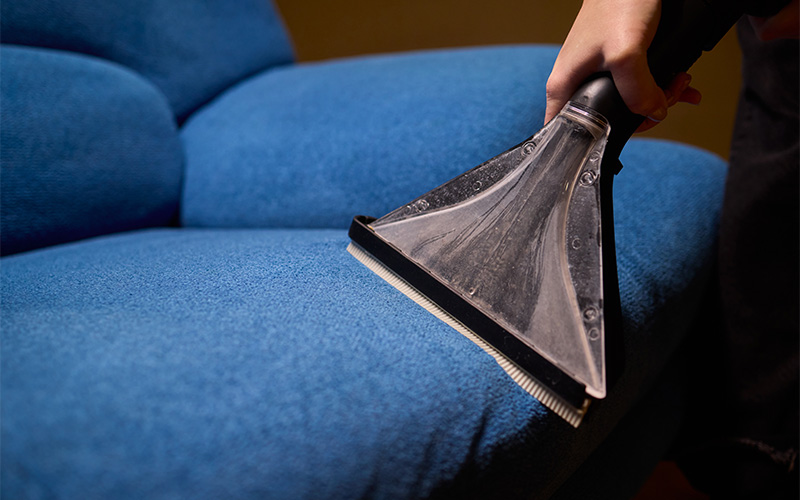
Before you begin, prepare the right tools and set up the area so you can clean thoroughly without over-wetting or damaging the upholstery. Gather a vacuum with an upholstery brush and crevice tool, clean microfibre cloths, a soft-bristled brush, a small bowl for mixing cleaning solution, mild detergent or an upholstery-safe cleaner, and baking soda for deodorising. If your fabric care code allows it, you may also prepare a handheld steam cleaner. Remove cushions and loose covers where possible, open windows or switch on a fan for ventilation, and keep pets and children away from the area while products are in use.
Step 1: Vacuum the sofa thoroughly
Use a vacuum cleaner with an upholstery attachment. Clean all surfaces, including cushions, seams, crevices, and under removable covers. This removes loose dirt that could otherwise spread during wet cleaning.
Step 2: Identify and test before treating stains
Check the fabric code, then patch-test any cleaner on a hidden area. This step prevents colour bleeding or texture damage.
Step 3: Apply targeted stain treatment
For water-safe fabrics, use a mild detergent solution and blot gently with a microfibre cloth. For solvent-only fabrics, use rubbing alcohol or a suitable solvent cleaner. This focused approach supports effective stain removal for sofas without saturating the fabric.
Step 4: Deodorise the sofa
Sprinkle baking soda evenly across the surface and leave it for 20 to 30 minutes. Vacuum thoroughly to remove odours caused by pets, sweat, or food.
Step 5: Clean the overall surface
Lightly wipe W or WS fabrics with a damp cloth using minimal moisture. For suitable materials, steaming can help lift embedded dirt, but it should be used cautiously and never on S or X-coded fabrics.
Step 6: Allow complete drying
Ensure good airflow by opening windows or using fans. Avoid sitting on the sofa until it is fully dry. Poor drying is one of the most common causes of mildew and water marks.
Common Warnings, Health Risks, and How to Avoid Damage
Using too much water can cause mildew, particularly in humid climates. Harsh chemicals may trigger skin irritation or respiratory discomfort, especially for children and pets. Mixing cleaning agents can release harmful fumes. To reduce risk, always use mild products, ventilate the area well, and avoid soaking the fabric. Never use steam on fabrics that do not permit moisture, as this can cause shrinkage or structural damage.
When Routine Cleaning Stops Being Enough
DIY cleaning is suitable for routine maintenance, but some situations require more advanced equipment and expertise. Persistent odours, large oil-based stains, or delicate upholstery often respond poorly to household methods. In such cases, engaging cleaning services in Singapore allows for controlled extraction and fabric-safe solutions.
Homeowners managing busy schedules may also find a home cleaning service useful for maintaining overall hygiene without added strain. These services are typically structured to cover high-use living areas such as living rooms, bedrooms, kitchens, and bathrooms. Common inclusions are dusting of surfaces, vacuuming and mopping floors, wiping of frequently touched points like switches and handles, basic bathroom sanitisation, and kitchen surface cleaning. While upholstery care is usually not the primary focus, routine home cleaning helps reduce the amount of dust, allergens, and grime that settle onto sofas between deeper cleans, supporting a cleaner and more hygienic living environment overall.
For heavily soiled upholstery, sofa deep cleaning services in Singapore can provide a deeper reset that home methods cannot achieve. Upholstery cleaning is a specialised process that goes beyond surface cleaning. Professional cleaners are trained to assess fibre types, backing materials, and stain characteristics before selecting appropriate cleaning agents and extraction methods.
Keeping Your Sofa Clean With Professional Help
Learning how to clean a fabric sofa empowers homeowners to maintain comfort, hygiene, and appearance with confidence. With the right preparation, correct techniques, and awareness of fabric limitations, routine cleaning becomes safer and more effective.
Contact us when deeper cleaning is required or when uncertainty arises. Professional support offers a reliable solution. Schedule a sofa cleaning assessment today and let our team help restore freshness, comfort, and cleanliness to your living space.